By Ella McRitchie, Watsi Summer Intern and Biomedical Engineering and Pre-Med student-athlete at Harvard College| July 3rd, 2026
I have this fear that follows me around. That I'll spend my career pouring everything I have into work that doesn't actually help anyone.
When you want to work in global surgery, you see enough to know it's a real risk. Rooms full of donated equipment nobody could use. Ventilators gathering dust in hospitals with no one trained to operate them. Generosity that showed up in the wrong form, at the wrong time, and unintentionally made things harder instead of easier.
So before I started my summer internship, I had a question I couldn't shake: how do you know when you're actually helping?
That's why I reached out to Watsi. I wanted to be convinced. I wanted to see whether an organization could do this well. Whether there were lessons that could make global health funding smarter, more honest, more aligned with what hospitals, and ultimately patients and communities, actually need.
I’ve spent the summer with Watsi reading donor comments, reviewing medical partner feedback, talking with the team, and researching nonprofits and B Corps that had built something real with their communities. I went in expecting to find communication strategies, retention tactics, maybe some clever fundraising framework.
What I found instead was simpler. And harder to manufacture.
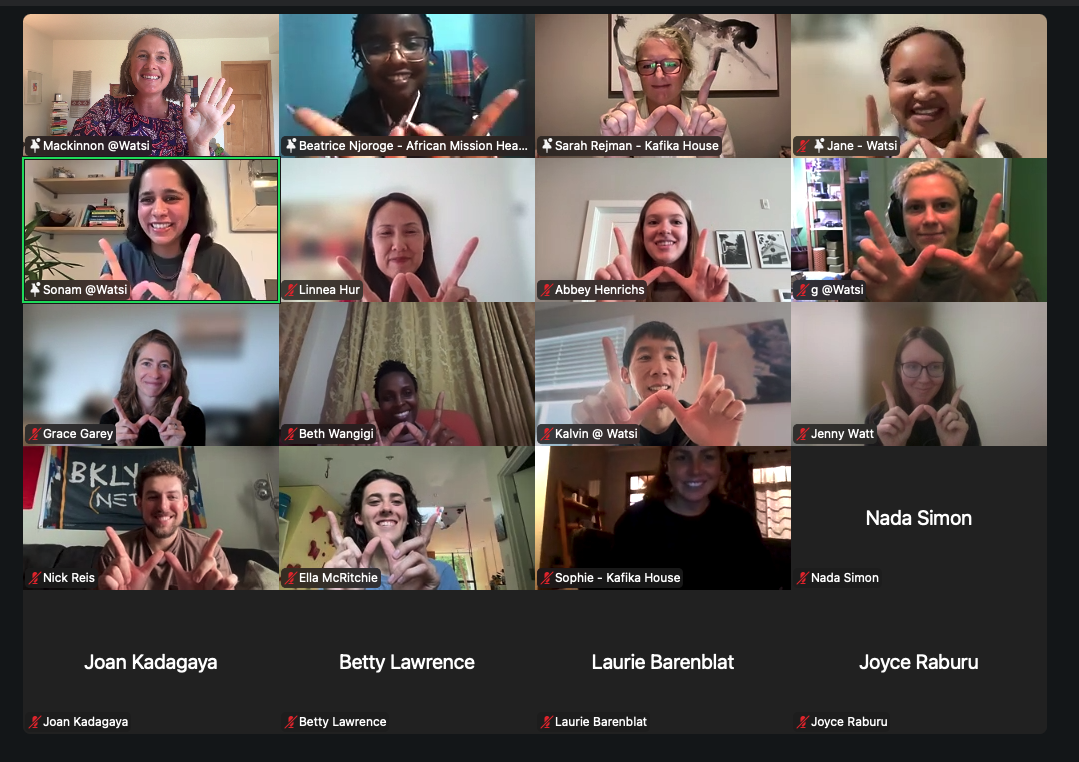
The first thing that surprised me about Watsi had nothing to do with the platform or the technology; it was the people. This is a small team, and from day one I felt genuinely welcomed, like my questions mattered rather than just what I could deliver. The values aren't something printed on a wall that you roll your eyes at as you walk by. They show up in how people talk about patients, in every design decision, in the care behind every email that goes out. You can feel when something is real.
The second thing I learned is that trust isn't built by only performing competence. It's built by being honest, especially about the places where you fell short. Watsi's radical transparency isn't just a feature; it's a philosophy that I saw firsthand. Donors can follow exactly where their money goes and who receives care. When something doesn't work, Watsi addresses this immediately even if it is a problem that could be fixed hidden in the background without anyone knowing it went wrong. In a sector where vague and flashy impact reports are the norm, that's rare.
When we asked donors why they trusted Watsi, the answers kept coming back to specific things: knowing where their money went, and feeling like the organization was honest when things didn't go right. One person still remembered an annual review from years ago that listed everything Watsi had gotten wrong. Another wrote: "I see the small contributions of individuals combine to create a community of care that makes a difference one person at a time." I felt donors weren’t just describing a charity they support, but a community they belong to.
That doesn't happen by accident.
Behind every patient story is a person who sat with it and made sure it was told carefully. Behind every feature is an engineer who thought hard about whether it actually made things clearer. Watsi uses AI and is transparent about that, but the judgment about what matters and why is still 100% human. Getting those small things right, consistently, over years, is what builds the kind of trust that makes someone remember an email from a decade ago.
Working through this, I realized we could take things even further.
Many donors don't know that a life-changing cataract surgery in Cambodia costs just $263 USD. When you understand why, through the cost structures in lower-income settings and the leverage of well-run local partnerships, it changes how you think about what your contribution actually does. There's also a lot more to say about how funding a surgery isn't just about one patient. It helps hospitals train the next generation of healthcare workers, retain skilled staff, maintain capacity, and keep serving their communities long after a single operation. The ripple effect is real, whether a donor sees it or not. As Watsi implements these recommendations, I hope even more of this impact comes to life.
In a few days, I will leave for Malawi.
I'll be shadowing surgeons, doing research, and finally seeing what global surgery looks like outside of lectures and papers. I'm going with a specific set of questions I want to sit with before I try to answer any of them. Where do donations and needs still not align? What gets lost in the distance between a donor clicking give and a hospital receiving support? Could giving be made more precise, so generosity arrives in the right form and not just with the right intention?
I'm keeping those open on purpose. The most important thing I learned this summer is that listening comes before solving. A lesson that Watsi has lived out since their earliest days.
When I started this internship, I was a little worried about what I'd actually contribute. I'm leaving with not only a finished project, but also having found a community of people doing difficult, unglamorous, important work with genuine care. Watsi showed me that small doesn't mean insignificant, and that when giving is grounded in honesty and accountability, it becomes something much larger than any single donation.
Thank you to everyone at Watsi for taking my questions seriously, for letting me into the work, and for showing me what this can look like when it's done right.
Ella
Watsi Summer Intern
The Watsi Team
Everyone deserves healthcare.